Waterproofing

What is Waterproofing?

Waterproofing is ensuring that water does not cross any construction material, foundation, wall or roofing.  This includes soil moisture, water vapour and liquid water that is under hydrostatic pressure. If you live in an environment with a damp climate which can often lead to problems such as basement flooding, this is an important factor to note. As a porous surface, concrete can quickly soak up water using capillary action between the aggregate if left untreated. Waterproofing compounds can keep cracks covered as they develop because it’s a flexible material that retains its initial elasticity and is applied more thickly, typically up to 40 mls – four times the thickness of damp proofing compounds – to the foundation. By sealing the concrete with a waterproofing substance, you’re providing additional protection to the structure.

There are some common types of waterproofing methods used in construction industry. Waterproofing in buildings / structures are generally required for:

  • Basement of structure
  • Walls
  • Bathrooms and kitchen
  • Balconies, decks
  • Terrace or roofs
  • Green roofs
  • Water tanks
  • Swimming pools

Cementitious Waterproofing

Cementitious waterproofing is the easiest method of waterproofing in construction. The materials for cementitious waterproofing are easily available from suppliers of masonry products, and they’re easy to mix and apply.

This method is often used in the internal wet areas such as toilets, showers and bathrooms. The waterproofing is usually a rigid or semi-flexible type waterproofing, but since it is used in internal areas such as toilets, it is not exposed to sunlight and weathering. Thus cementitious waterproofing does not go through contract and expansion process.

Bituminous Based Membrane

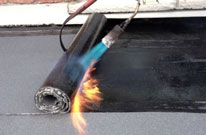
Bituminous membrane waterproofing is a popular method used for low-sloped and flat roofs due to their proven performance. Bituminous waterproofing consists of torch on membrane and self-adhesive membrane.

Self-adhesive compounds comprise asphalt, polymers and filler; additionally, certain resins and oils may be added to improve adhesion characteristics. The self-adhesive type has low shelf life as bonding properties of the membrane reduce with time.

Torch on membrane have both exposed and covered types. Exposed membrane often has mineral granular aggregate to withstand the wear and tear of the weathering.  With the covered membrane, a contractor has to apply aT protective screed to prevent the puncture of the membrane.

Polyurethane Liquid Membrane

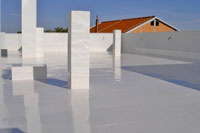
The polyurethane liquid membrane method of waterproofing is used for a flat roof area which is exposed to weathering. This waterproofing method is expensive.

Polyurethane Liquid Membrane does offer higher flexibility. Polyurethane is very sensitive to existing moisture content present, therefore before application, the contractor has to be very careful evaluating the moisture content of the concrete slab, otherwise peeling or de-bonding of membranes may occur after application which will render the waterproofing non effective.